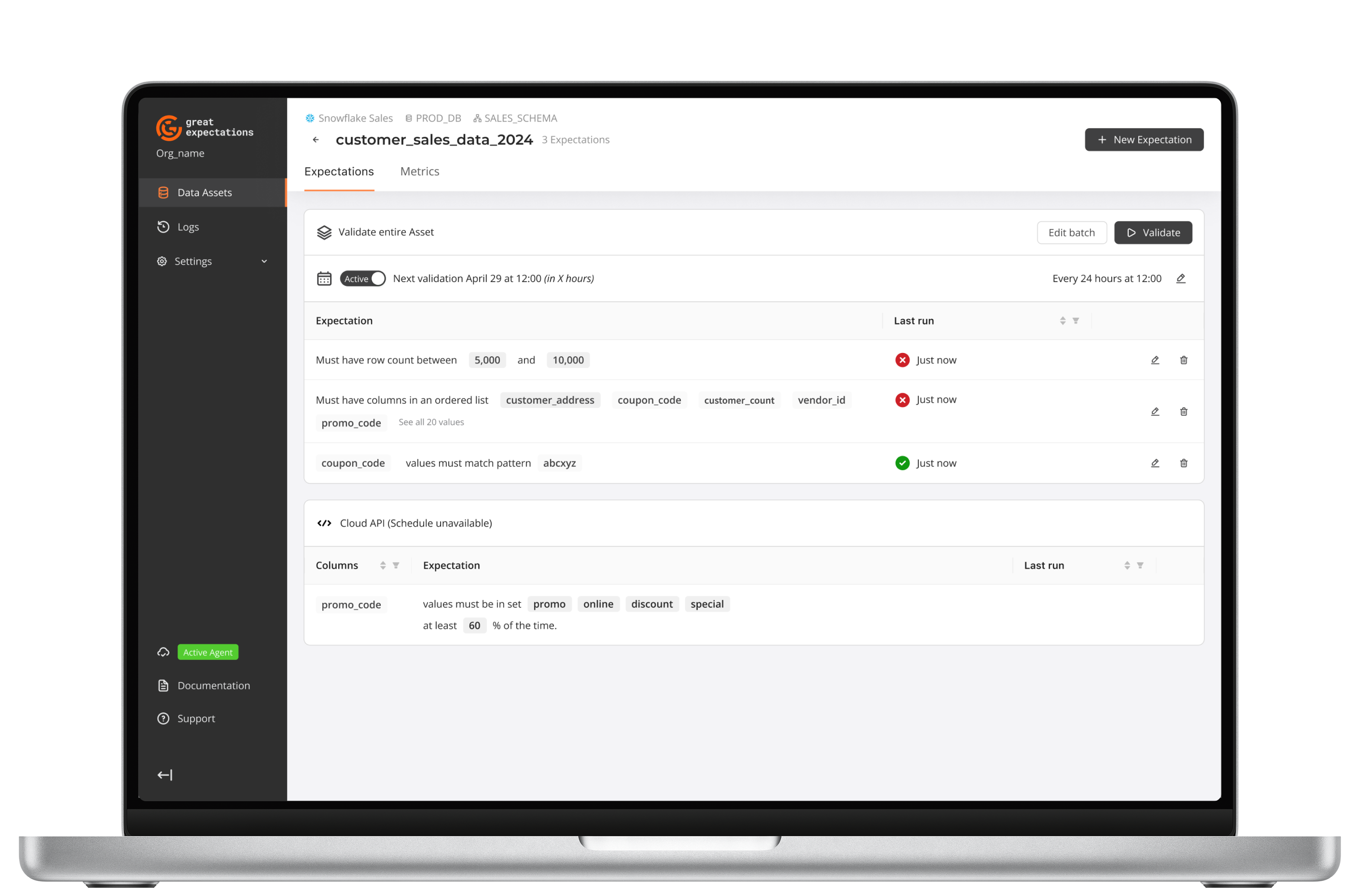
Great Expectations Cloud (GX Cloud) is an application to address data integrity issues by creating rules to ensure data are as organizations expected. Allowing for better reporting to make informed decisions that impact their companies.
The goal was to create an web application interface to reduce the code heavy set up and have the ability for non-technical users to run and apply tests for their organizations data. Recently Acquired by Fivetran in April 2026!
Great Expectations is a Utah based data company. Established in 2017 as an open source offering (OSS) allowing users to quickly select from a large list of flexible "Expectations" or rules to run against data.
Taking on Senior role as a Junior Designer
I joined Great Expectations as a product designer as one of 2 designers in an organization of well over 30+ engineers. I was able to spend about 1 month with the previous designer and head of product before both of them moved on to pursue other career options. I was then the sole designer as I supported design work across GX Cloud application along with our documentation site. Leading UX and UI work let me embrace the complexity of ambiguous product problems and experiencing a startup mentality. I grew so much in the almost 3 years I was there, some of my key achievements that I am most proud of are listed below:
Launched improved user flow This helped our team revisted the OSS counterpart as a whole and reimagine what a Cloud interface looks like. Reducing unesscary terminology that caused confusion and steamlining user flow.
Redesigned documentation information architecture Lead UX and managed graphic designer to overhaul documentation of GX to meet user needs when learning about GX Cloud's capabilities.
Improved Design system management and implementation improved and implemented branding to existing Design system (AntD) to allow for quickly implementation of components and ensuring brand allows for accessibility.
Overhauling the entire Cloud product Reworked the entire product from ground up, removing unnecessary terminology and improving user experience.
PROCESS - The Beginning
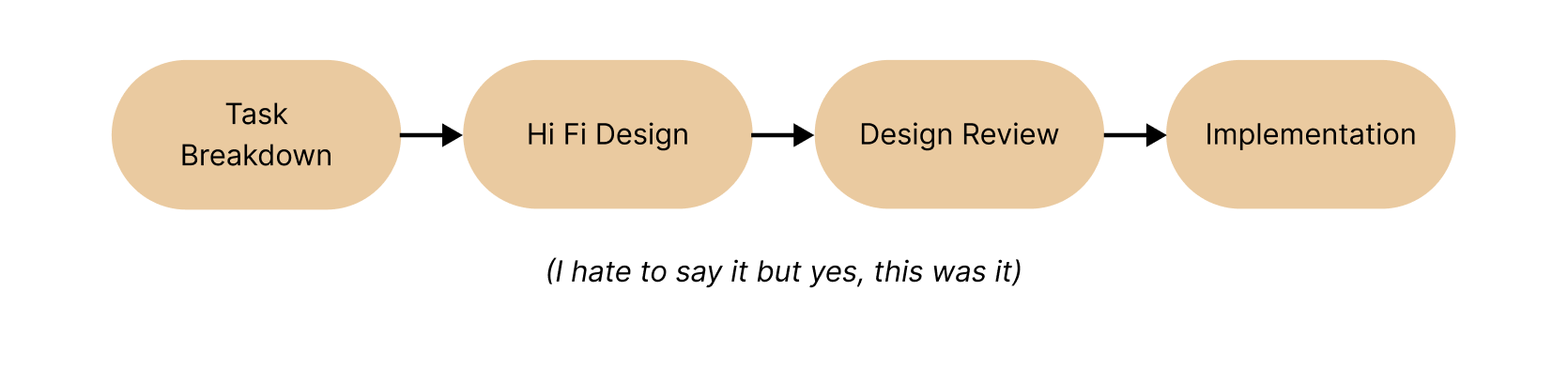
As daunting as it was being the sole designer for a bit, my first course of action was to continue the existing design process. It consisted of tickets from engineering teams and working very closly with the CTO to break down work as we rebuilt our product team. It was quite straightforward but no where near the standard process I wanted. I was left in a great spot, the team had mostly focused on research, understanding the core problem, flushing out user personas and a foundational prototype. I soaked up hours of interview recordings and reviewed all the information that was offered and hit the ground running.
PROCESS - The End
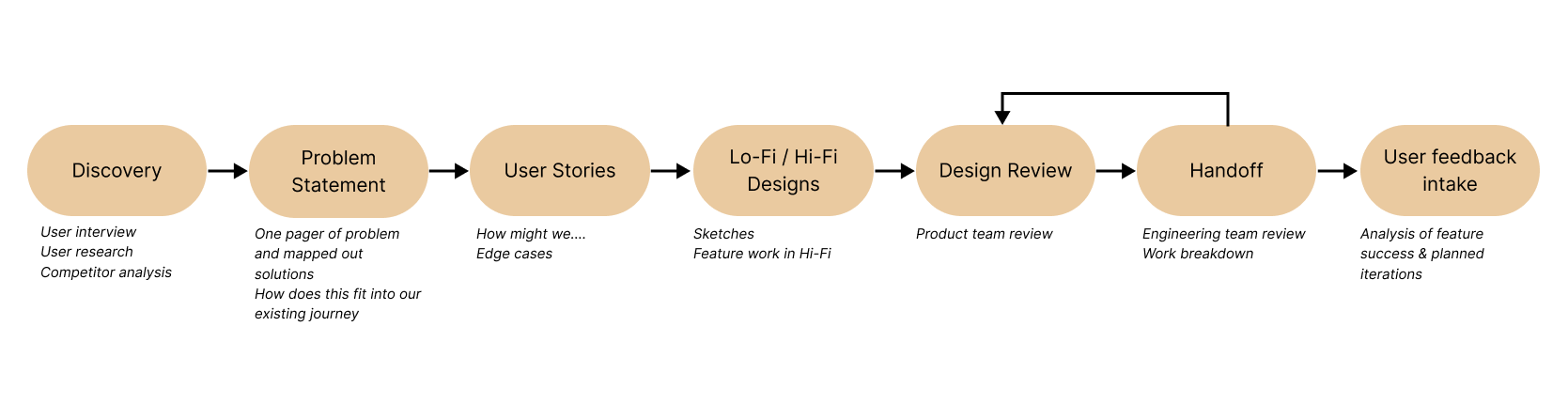
Once our product team was more flushed out which consisted of a team of: 2 Designers, 3 Product Managers, and Head of Product. We were able to better flush out our design process. Still being a bit rough around the edges it was still much more standarized and allowed us to better break up work to divy up to our teams, and helped keep focus on releasing our beta launch in Fall of 2024. Still not the most polished process but we were gaining trust within the company and most importantly of all trusting the process.
REVISTING THE USER JOURNEY
Upon our initial launch, we had been established as the "Data quality tool of choice" for a few companies that provided us a lot of great feedback. Users were able to get connected and apply GX's Expectations and gain valuable insights into their organizations data. I relied heavily on feedback that was a bit nuanced but very much important to users: the ability to pass the application and testing of the Expectations to others within their own organization. Being a non-technical user myself, I very much related to the user groups of analysts, subject matter experts and sales users to be able to not have to run any terminal or code and be able to test my data.
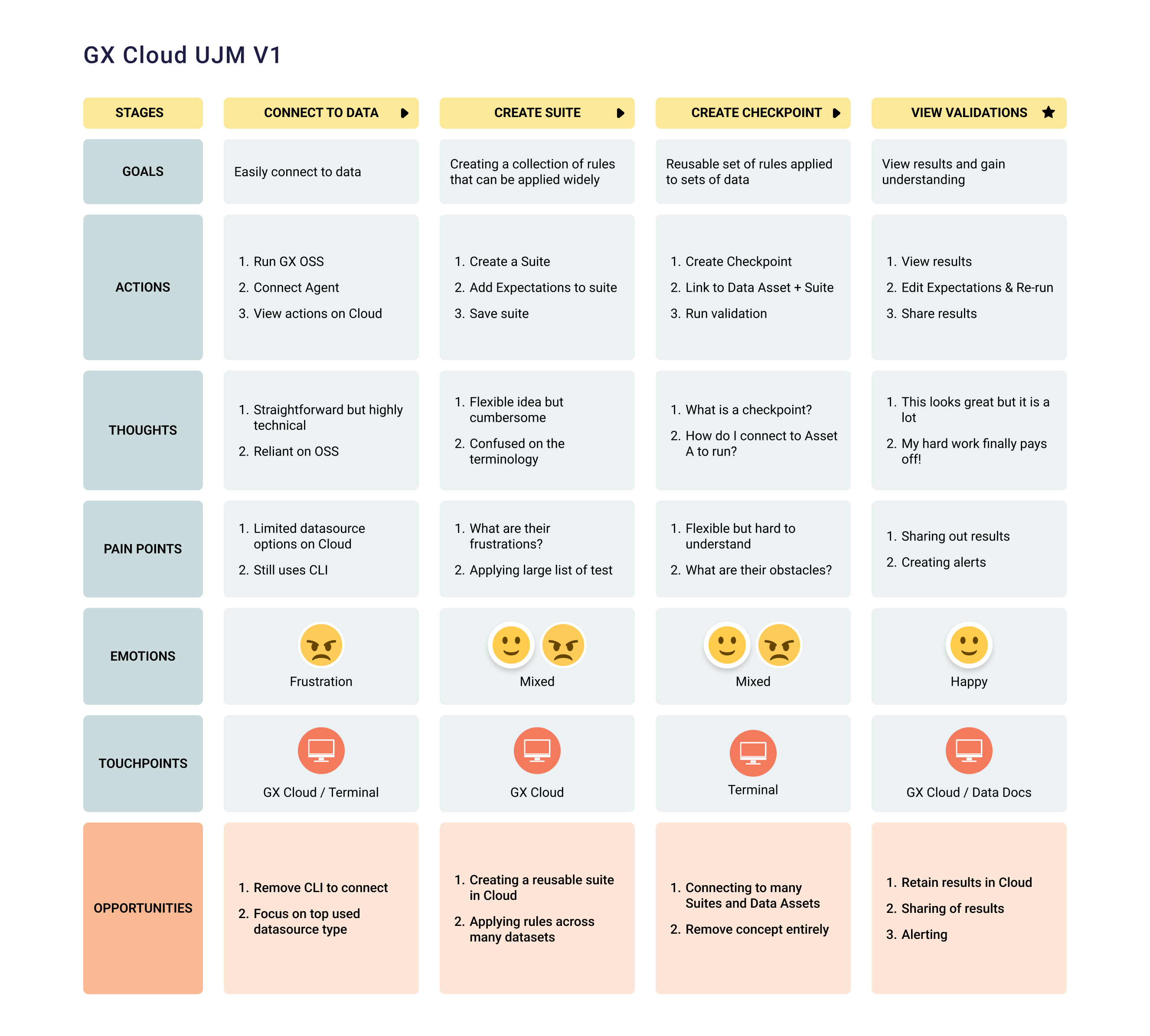
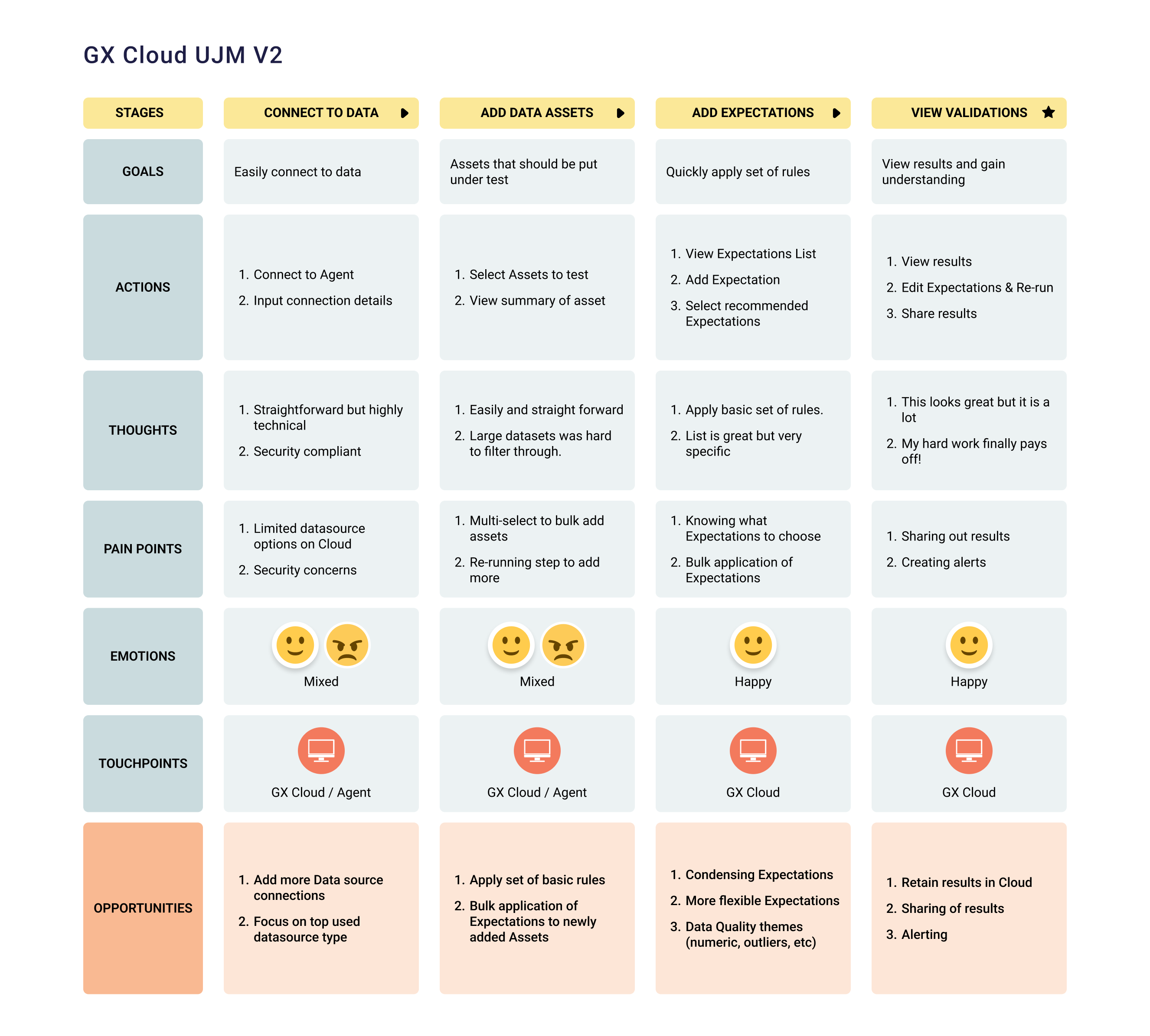
I discussed with the team to create a user journey map to better convey to the organization that we needed to simplify and allow for a more accessible way for users to get started and experience GX Cloud's "value moment." This caused some initial friction within the orgnaization but upon seeing the diagram the rest of the organization immediately on board with the change.
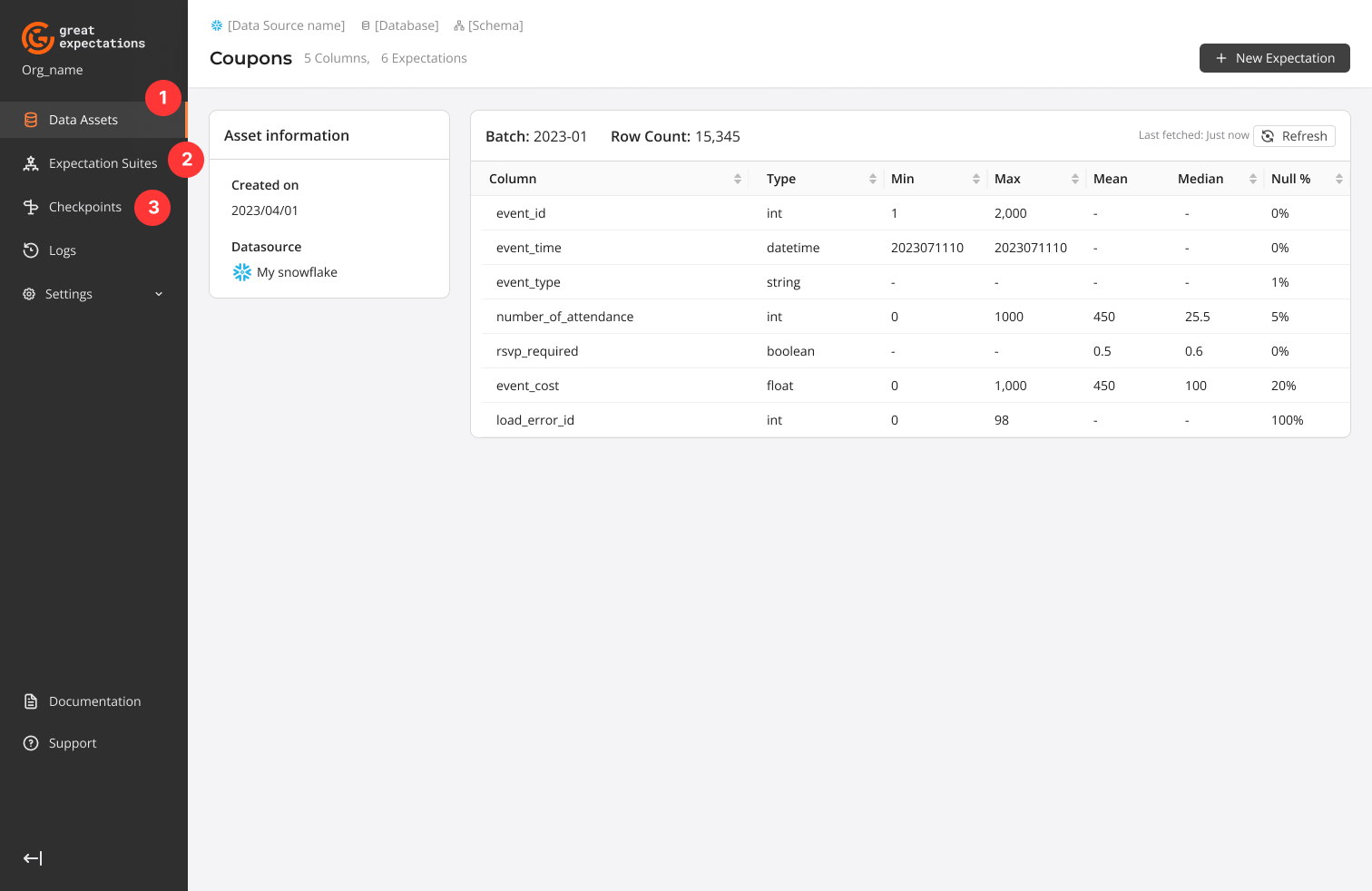
Frustration with the overall journey, users must connect to a datasource within "Data Assets" (1) then navigate to "Expectation Suites" (2) to build a list of tests and finally land on "Checkpoints" (3) to actually run the list of tests and see the value of GX Cloud. These terms were very familiar to users that had experienced GX OSS offering but was too much for new users that wanted to explore GX Cloud.
OVERHAULING AND INFORMATION ARCHITECTURE
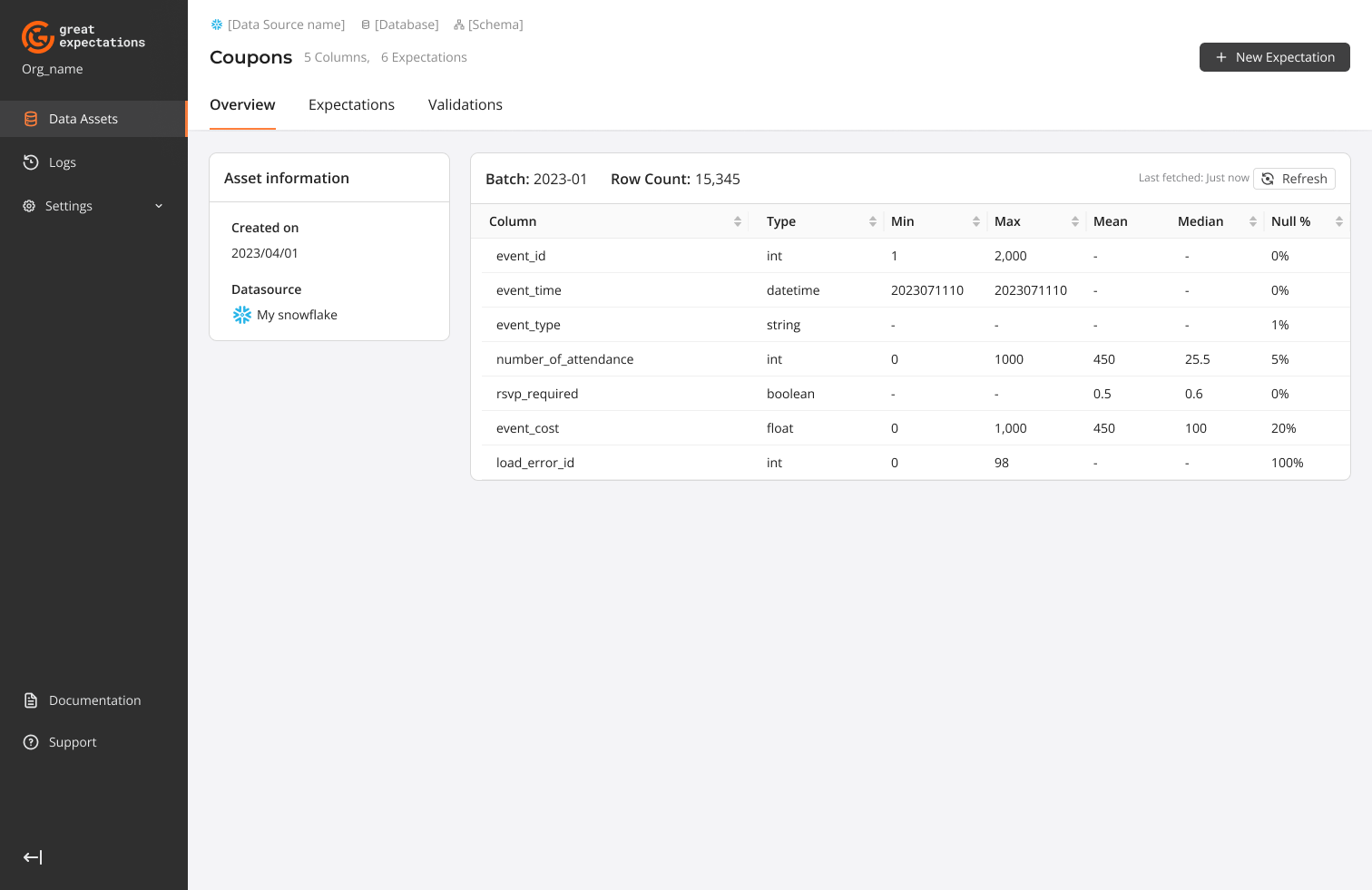
Redesigning the UI was no small feat, it required working with teams across multiple departments (both OSS and Cloud) to be able to fully imagine what a more streamlined experience would be. We started out with what terms and functions we were able to "hide" that users did not need to even think about. The end result was removal of both "Expectation Suite" and "Checkpoint" pages and allowing users to stick to one part of the application to do all the necessary tasks. The final user journey mapping focused on GX Cloud with GX OSS concepts hidden to reduce confution and improve user experience. We advocated for removal of the concepts of "Expectation Suite" and "Checkpoints." While important part of the OSS offering this only complicated GX Cloud.
Having the inclusion of a sub menu allowing users to select a data asset and then apply tests and run to see the results or "validations" was a huge success. Users expressed that it was a much more simplified experience and easy to get from start to finish.
BUILDING UPON A SOLID FOUNDATION
The product team was now fully operational and focusing on next top priorty items to address such as product features to improve GX Cloud experience and align more with exisiting features OSS users were using. Rehauling the product gave us a lot of valuable feedback from both existing users and new users alike. Many users expressed ease of use by keeping navigation simple and straight forward, grasping the product was improved and creation of Expectations was much faster.
PROTOTYPE
One the last projects I worked on after overhauling the main GX Cloud app was letting users get an idea of what the connected data asset contains. This prototype encompasses a year of work to simplify and creating a more streamlined experience of GX Cloud. This project was focused around getting users started quickly and have the ability to see the "value moment" of GX Cloud.
LEARNING & TAKEAWAYS
My time at GX will forever be dear to my heart in many different ways. I had the opportunity to learn so much from everyone that the list is too long to put it all here. Some of my biggest lessons I learned are listed below:
Advocating for user needs, balancing it with business goals Having to balance business goals and user experience is a fine line to walk, but at the end of the day we must find the quickest way to deliver value to users incrementally. This involves working with Project managers, shareholders, engineering, there will always be a lot of opinions but it is our job to convey why we should prioritize certain work over others.
Working on a variety of different projects Design is not always easy, I have to learn new things constantly and not being afraid to fail. Design is never finished but we can control how well we deliver work that is to our standards and trusting the process.
Approaching problems from different perspective Our organization was very much accustomed to the existing OSS offering that the product team needed to leverage research, user feedback, and analytics to allow us to better understand the main problem that should be addressed.